
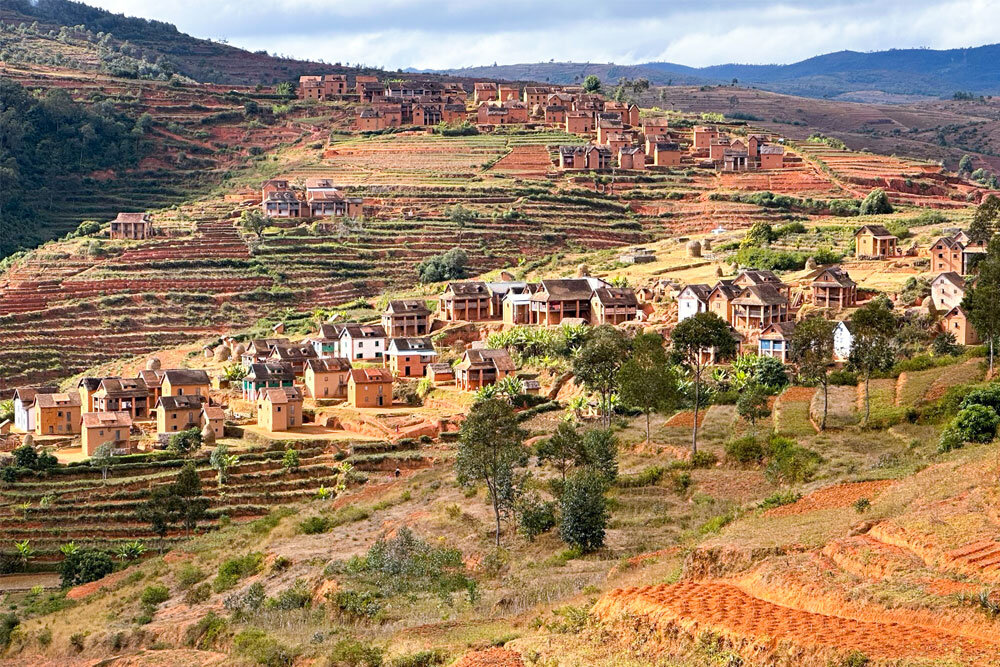
With the support of the French Development Agency (AFD) and the technical assistance of HYDEA, the Indian Ocean Commission (IOC) has presented a unique regional inventory of traditional architectures. Developed as part of the Cultural and Creative Industries (CCI) development project, this work aims to preserve, document, and promote the architectural knowledge that shapes the identity of the islands of the Indian Ocean.

HYDEA provided technical and methodological support to the national teams in charge of the surveys, contributing to the development of cataloguing forms, documentation guidelines, and strategies for showcasing the results. Thanks to this collaboration, the inventory now serves as a key resource for the preservation and promotion of the region’s built heritage.
Thatched roofs, verandas opening onto the sea, basalt or woven wood walls — these elements tell the story of the peoples of the Indian Ocean. Behind every house, courtyard, or workshop lies ancient knowledge passed down from generation to generation. It is this living heritage that we have chosen to celebrate through extensive research and documentation carried out collaboratively across the islands of the region.
A Heritage to Preserve
A Legacy to Rediscover
From Mauritian craftsmen to Comorian carpenters, from Malagasy builders to Seychellois woodworkers, local construction techniques reflect an extraordinary ability to adapt to the climate, environment, and island ways of life. These skills, sometimes threatened by the rapid modernization of the territories, deserve to be rediscovered, passed on, and promoted.
The regional inventory aims to record and document these forms of traditional architecture. Beyond collecting information, it is also an initiative of awareness and transmission — to share with the wider public the richness and diversity of these built heritages, and to restore visibility to the women and men who keep them alive.
A Human and Collective Journey
This fieldwork brought together local teams of experts, architects, and artisans who travelled through villages, islands, and remote regions to gather testimonies, photographs, and stories. The collective effort resulted in 366 documented records: 293 traditional buildings, 52 urban complexes, and 21 forms of intangible heritage and know-how.
Behind these numbers lie faces and stories, like those of a house built in the Malagasy trano gasy tradition, a Mauritian carpenter’s workshop, or a Seychellois veranda. Each record tells of an encounter, a memory, a gesture passed down from generation to generation.
During the visits, the inventory helped forge connections between generations, restore the value of ancient practices, and foster a sense of collective pride. Preserving heritage also means preserving an identity and a relationship with the land.
A Shared Heritage, Available on Kiltir.org
The full results of this work are available on Kiltir.org, the regional platform dedicated to the arts, cultures, and knowledge of the Indian Ocean. Visitors can explore an interactive map to discover the diversity of island architectures.
This inventory represents a first step toward better protection and promotion of the region’s built heritage. It also aims to inspire a more sustainable contemporary architecture, rooted in local traditions and respectful of the environment.